
Hedgerow restoration in west Cheshire
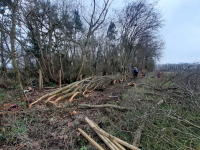
During National Hedgerow Week, a national awareness event celebrating the importance of hedgerows, we are highlighting work undertaken at one of the Council’s woodlands to help strengthen hedgerows and provide vital habitats for local wildlife.
The Council’s Forestry Officer and Green Infrastructure Health Ranger teamed up with Wirral Countryside Volunteers and other community volunteers in February 2026 to begin restoration work on the hedges at Wervin Woods, a Council-owned woodland located between Chester and Ellesmere Port.
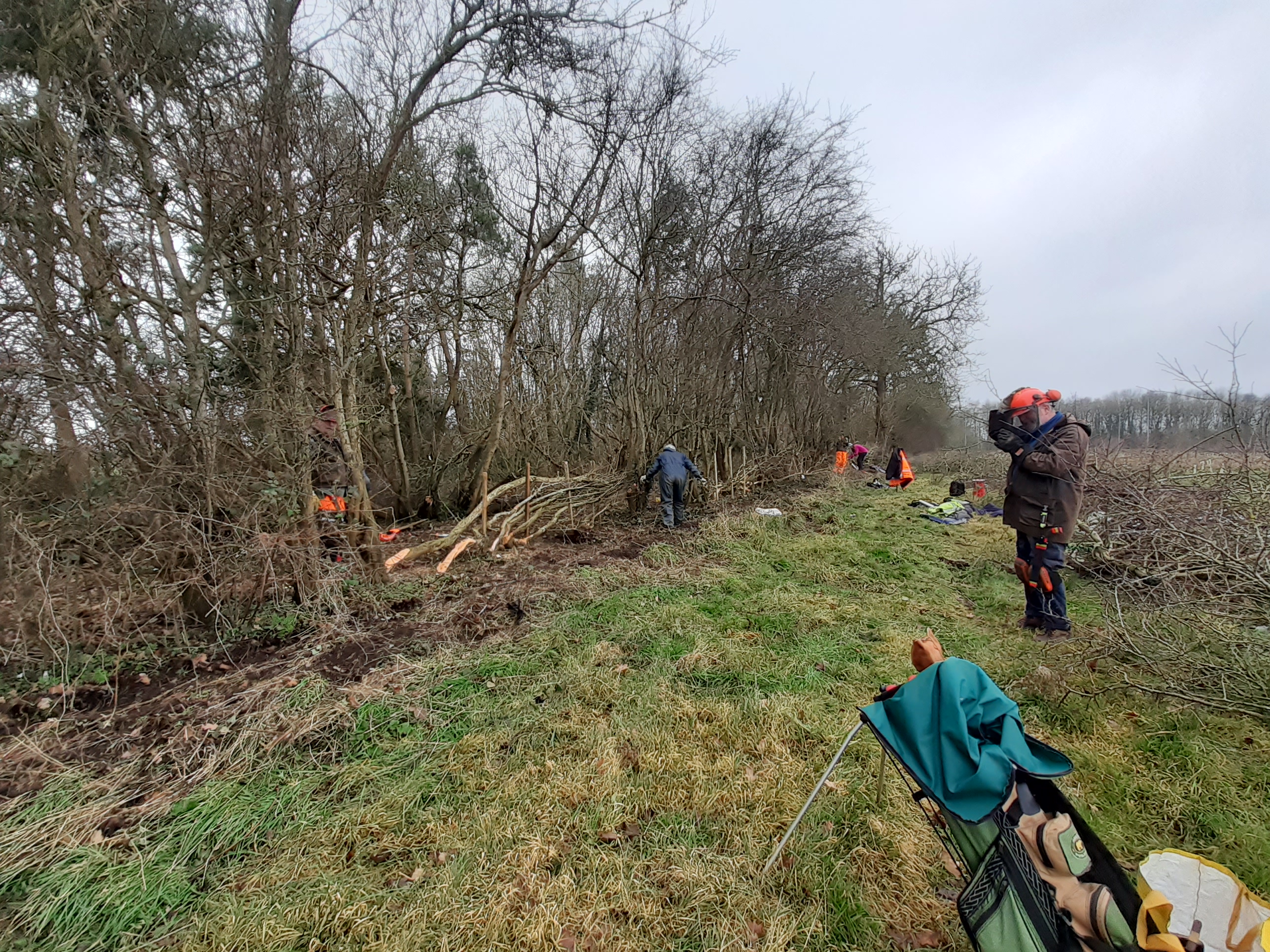
Wervin Woods is a community and conservation woodland established during the 2022/23 planting season. Alongside the woodland creation, work has been ongoing to restore and establish a mosaic of habitats, including a pond, wildflower areas, and grassland meadow, with hedgerows being the latest improvement project.
The site’s hedgerows had weakened due to overshading—where growth becomes too tall and dense—and poor overall structure. This is often caused by decades of over-trimming, which took place prior to the Council taking ownership of the site.
Hedgelaying, a traditional technique where hedge stems are partially cut and bent over, has been used to restore the hedgerows at Wervin Woods. This method helps keep hedges healthy, strong, and functional, rather than allowing them to become tall, gappy, or overgrown. The laid stems grow new shoots, making the hedge thick and dense again, which enhances wildlife habitats, supports farmland management, and preserves cultural heritage.
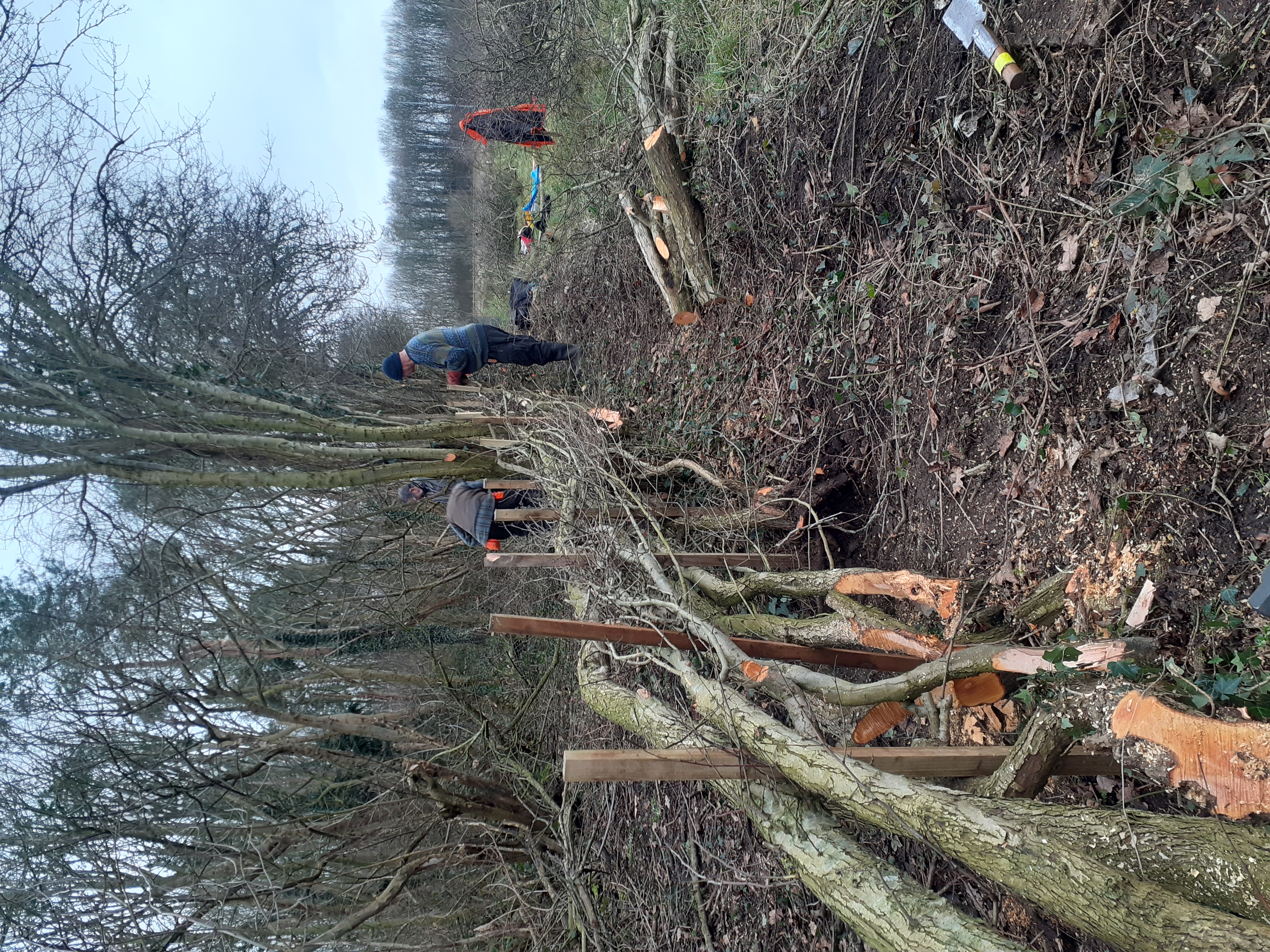
The Cheshire and Warrington Local Nature Recovery Strategy recognises the importance of hedgerows as living ecosystems that support wildlife and store carbon. Cheshire was once the number one hedgerow county in England but has lost 66% of its hedgerows since 1976—falling from 33,000 km to 10,118 km—making it vital that we protect and restore what remains.
Benefits of Hedgelaying
The National Hedgelaying Society highlights the many benefits associated with this traditional practice:
Ecological benefits
Hedgelaying creates dense, bushy hedges that provide shelter, nesting sites, and food for a wide range of wildlife, including birds, small mammals, insects, and pollinators such as bees and butterflies. The structure of laid hedges allows species to move safely between habitats and helps protect vulnerable wildlife, including hedgehogs, bank voles, and butterflies such as the brown hairstreak.
Agricultural and land management benefits
Hedgelaying produces thicker, more resilient hedges than standard trimming, creating effective barriers for livestock without the need for additional fencing. Hedgerows also reduce wind speed, prevent soil erosion, and act as natural barriers against pests and pollution. By increasing soil infiltration and reducing peak water flows, they can help improve water management and last for decades with minimal maintenance.
Cultural and aesthetic value
This traditional countryside craft has been practised in the UK for hundreds of years. Different regions have developed distinctive styles, allowing hedges to reflect local heritage and craftsmanship. Beyond their practical function, laid hedges enhance the visual appeal of landscapes, contributing to the enjoyment of rural areas and the preservation of cultural identity.
Wildlife and conservation
Laid hedges provide immediate shelter for wildlife and encourage the growth of native plant species, which in turn support local ecosystems. Conservation-focused hedgelaying often minimises the use of stakes and binders, creating self-supporting, wide, and tangled hedges that maximise habitat value from the outset. This approach balances ecological benefits with practical land management needs.
Get involved with our volunteering opportunities
All of the Council’s woodland creation sites have a year-round programme of volunteering and education opportunities, allowing volunteers to enhance and maintain the woodlands and be part of species monitoring. If you are interested in getting involved please email: woodland@cheshirewestandchester.gov.uk for more information.
