Climate Emergency

Share Climate Emergency on Facebook Share Climate Emergency on Twitter Share Climate Emergency on Linkedin Email Climate Emergency link

The Climate Emergency facing our world is a very real issue, but there is plenty we can do to take action to help protect our planet.

Cheshire West and Chester Council declared a Climate Emergency in the borough in 2019 and put forward its Climate Emergency Response plan, which aims to help the borough become carbon neutral by 2045.

This is a space to share ideas, stories and tips about what you are doing locally to reduce your carbon emissions and impact on the environment. Now's the time to react and play your part to make our borough carbon neutral.


The Climate Emergency facing our world is a very real issue, but there is plenty we can do to take action to help protect our planet.

Cheshire West and Chester Council declared a Climate Emergency in the borough in 2019 and put forward its Climate Emergency Response plan, which aims to help the borough become carbon neutral by 2045.

This is a space to share ideas, stories and tips about what you are doing locally to reduce your carbon emissions and impact on the environment. Now's the time to react and play your part to make our borough carbon neutral.


What are you doing to tackle the Climate Emergency?

Residents, community groups, schools and businesses across the borough are busy playing their part to protect our local environment and reduce their impact on the planet by reducing their carbon emissions.

Lots of people taking action together can make a big impact and we want to hear all about the things you are doing. It could be a short tip, a blog or vlog on a certain topic, a pledge to say what you hope to achieve or about an event you’ve organised.

By sharing your story, you could inspire others across the borough to take action today and help us achieve our ambition of being a carbon neutral borough.

Please add your story here

  • You can add text, photos and videos to your story
  • Please ensure you have permission to share anything featured here
  • Please remember this is a public space, so please do not share any personal information about yourself or others in your comment.

We may occasionally contact people who have uploaded an inspiring story to ask if we could share it wider, such as on the Council's social media channels or our Climate Emergency enewsletter. We will always ask permission before we do this and we will only share stories with your approval.

Thank you for sharing your story with us. 

You need to be signed in to share your story.

All fields marked with an asterisk (*) are required.

  • Share FREE FILM NIGHT: People's Emergency Briefing on Facebook Share FREE FILM NIGHT: People's Emergency Briefing on Twitter Share FREE FILM NIGHT: People's Emergency Briefing on Linkedin Email FREE FILM NIGHT: People's Emergency Briefing link

    FREE FILM NIGHT: People's Emergency Briefing

    8 days ago
    Image of person looking at world on a screen


    FREE FILM NIGHT: People's Emergency Briefing
    Friday 15th May
    Winsford Academy,
    Grange Lane, Winsford, CW7 2BT
    Film starts at 7.30pm. Doors open from 7pm
    Film is 50 minutes
    Conversation & Discussion afterwards


    The solutions are ready, but how do we convince our leaders
    to take them and make life better for everyone?
    Catch this amazing film,
    documenting the recent National Emergency Briefing.
    Community groups, like ours, are showing this across the country.
    Join us for an unforgettable and informative evening.
    The film will be followed by a discussion so everyone can share their thoughts.

    IT'S A FREE EVENT!

    Door's open
    ... Continue reading


    FREE FILM NIGHT: People's Emergency Briefing
    Friday 15th May
    Winsford Academy,
    Grange Lane, Winsford, CW7 2BT
    Film starts at 7.30pm. Doors open from 7pm
    Film is 50 minutes
    Conversation & Discussion afterwards


    The solutions are ready, but how do we convince our leaders
    to take them and make life better for everyone?
    Catch this amazing film,
    documenting the recent National Emergency Briefing.
    Community groups, like ours, are showing this across the country.
    Join us for an unforgettable and informative evening.
    The film will be followed by a discussion so everyone can share their thoughts.

    IT'S A FREE EVENT!

    Door's open at 7pm.
    Over 16's only - those aged 16-18 need to be attending with a person over 18.

    Book your free ticket here:
    https://buytickets.at/winsfordsustainabilitypartners/2152124

    Check out the trailer:
    https://www.youtube.com/watch?v=JaI-dHgh65Q

    Please email us if you would like to join a car share going to this event from Northwich
    Title your message 'CAR SHARE to FILM NIGHT': transitionnorthwich@gmx.com


  • Share Hoole Goes Green with New Hub and Green Business Map on Facebook Share Hoole Goes Green with New Hub and Green Business Map on Twitter Share Hoole Goes Green with New Hub and Green Business Map on Linkedin Email Hoole Goes Green with New Hub and Green Business Map link

    Hoole Goes Green with New Hub and Green Business Map

    28 days ago


    Eco Communities and Hoole Community Centre are building on the success of last year’s Hoole Green Action Fair to launch two exciting new community initiatives in 2026, The Hoole Green Hub and The Hoole Green Business Map. Both will be officially launched as part of this year’s Hoole Green Festival, which opens with a community event at Hoole Community Centre on Saturday 28th March.

    Hoole Green Hub is a ‘Refill, Reuse & Repair’ scheme for the community there, linking directly with Eco Communities, the Hoole based community enterprise’s online Full Circle Shop.

    It will be the first location for Eco... Continue reading


    Eco Communities and Hoole Community Centre are building on the success of last year’s Hoole Green Action Fair to launch two exciting new community initiatives in 2026, The Hoole Green Hub and The Hoole Green Business Map. Both will be officially launched as part of this year’s Hoole Green Festival, which opens with a community event at Hoole Community Centre on Saturday 28th March.

    Hoole Green Hub is a ‘Refill, Reuse & Repair’ scheme for the community there, linking directly with Eco Communities, the Hoole based community enterprise’s online Full Circle Shop.

    It will be the first location for Eco Communities offering the collection and refill for laundry and cleaning products, saving tonnes of single-use plastic bottles each year.

    The Hub will also offer reusable party and event kits to hire, a drop-off point for hard-to-recycle medical blister packs, and support for practical ways residents can reduce waste and save money.

    The Hoole Green Business Map celebrates Hoole’s independent businesses and helps residents make more sustainable choices while shopping locally. The map encourages

    Shopping Local; Keeping money in the community and reducing transport emissions,

    Eating Seasonal, Local & Responsible Food from bakers and greengrocers to fishmongers and butchers; fresher food with fewer food miles.

    Eat Out Sustainably supporting cafés and restaurants prioritising local suppliers and seasonal menus,

    Refill & Reuse bringing your own containers and using refill options where available.

    It also Supports Local Artists by encouraging the choice of gifts and artwork from independent shops showcasing local creatives,

    Sustainable Fashion by shopping for second-hand and pre-loved items on the high street and encourages

    Repair, Don’t Replace extending the life of clothes and shoes using local repair services.

    Helen Tandy, Founder of Eco Communities said; “These two initiatives are about making it easy for people to live more sustainably. The Hoole Green Hub and Green Business Map give practical, local options that support both the planet and the community on our doorstep with plans to extend this concept into more parts of Cheshire.”

    She added; “The map isn’t just for the festival, it’s designed to be a lasting resource for the community. It will be updated annually by the not-for-profit team at Eco Communities, who support green projects at Hoole Community Centre and are also behind Chester Green Weekend each June.

    Printed maps will be available in Hoole businesses, and many Hoole residents will also receive copies through their doors through April.”

    Donna Collings, Manager, Hoole Community Centre summarised; “It’s brilliant to see sustainability made simple with the projects now in place. Having refills, repair options and local food all highlighted in one place makes it much easier for Hoole users to read about and make greener choices.”

  • Share Chester students spotlight enterprising ideas after earning places in North West top 10% on Facebook Share Chester students spotlight enterprising ideas after earning places in North West top 10% on Twitter Share Chester students spotlight enterprising ideas after earning places in North West top 10% on Linkedin Email Chester students spotlight enterprising ideas after earning places in North West top 10% link

    Chester students spotlight enterprising ideas after earning places in North West top 10%

    by Felicity Roberts, about 1 month ago


    University of Chester students showcased their innovative and eco-friendly business ideas after being chosen from more than 120 teams to compete at an event bringing together the North West’s most talented young entrepreneurs.

    Two teams from the University’s Business School earned places at the recent Young Enterprise North West Start-Up Awards Final, with one achieving a special accolade.

    VuelaNova and LatherCo were joined by 10 other teams from universities across the region, making up the top 10% in the North West, selected from all who entered to go forward to the stage of the competition. They pitched to the audience... Continue reading


    University of Chester students showcased their innovative and eco-friendly business ideas after being chosen from more than 120 teams to compete at an event bringing together the North West’s most talented young entrepreneurs.

    Two teams from the University’s Business School earned places at the recent Young Enterprise North West Start-Up Awards Final, with one achieving a special accolade.

    VuelaNova and LatherCo were joined by 10 other teams from universities across the region, making up the top 10% in the North West, selected from all who entered to go forward to the stage of the competition. They pitched to the audience and championed their ideas in interviews at Sister, at the Renold Building, in Manchester. Multiple expert panels questioned the teams on business viability, sustainability, financial planning and scalability.

    The competition forms part of the national Young Enterprise programme and is embedded within the University’s Creative Entrepreneurship module, which emphasises learning through the development and launch of real-world business ventures.

    VuelaNova is a sustainable 3D shoe printing service creating fully customised, anatomically matched footwear. Each pair is designed as a one-of-one product, tailored precisely to the customer’s foot structure, reducing waste while enhancing comfort and durability. Their innovative approach to sustainable manufacturing impressed judges across multiple panels, resulting in the team being presented with the Sustainability Award at the regional final.

    LatherCo has developed a self-contained make-up brush cleaning system designed to improve hygiene and efficiency for make-up users. The product provides an integrated cleaning solution that simplifies maintenance while promoting better cosmetic hygiene practices.

    While the teams just missed out on moving to the next stage, in addition to the special award, they have been applauded by organisers and their tutors for their business acumen and innovation.

    Cheryl Sørensen, Senior Lecturer at the University of Chester, said: “The two teams representing Chester Business School really showcased their confidence, professionalism, entrepreneurial resilience and passion for their business ideas.”

    She added that their achievement reflected not only the strength of their ideas, but also the impact of practice-based learning and entrepreneurial skill development at Chester Business School.

    Carlos Ronquillo, from VuelaNova, who was also nominated for Student of the Year, said: “It was a great experience where we got to meet the other leading start-ups in the North West region and receive valuable feedback from investors, industry experts, as well as academia professionals on how to continue developing.”

    He added that further updates on VuelaNova will be shared at: https://www.instagram.com/vuelanova

    Suzanne Lockwood, Start-Up Strategic Lead at Young Enterprise said: “Reaching the North West final is a fantastic achievement and a real testament to these students’ creativity, resilience and drive. At Young Enterprise, we are passionate about empowering students to turn ideas into real-world ventures, and both VuelaNova and LatherCo demonstrated exactly the kind of innovative thinking and problem solving that defines the entrepreneurial leaders of the future. We’re incredibly proud of what they’ve accomplished and excited to see where their ventures go next.”

    The Young Enterprise competition is embedded within Creative Entrepreneurship, a module studied as part of a range of Chester Business School courses including BA Business Management. The module is designed to move beyond theoretical learning by enabling students to:

    • Develop and validate real business ideas
    • Work in entrepreneurial teams
    • Engage with external stakeholders and judges
    • Respond to live feedback in competitive environments.

    The entrepreneurial journey has continued with a Business Launch Event at the University this month, featuring all 26 teams from the module presenting their business ideas to guests including alumni, entrepreneurs and business owners.

  • Share Student volunteers join together for community litter pick on Facebook Share Student volunteers join together for community litter pick on Twitter Share Student volunteers join together for community litter pick on Linkedin Email Student volunteers join together for community litter pick link

    Student volunteers join together for community litter pick

    by Felicity Roberts, 2 months ago

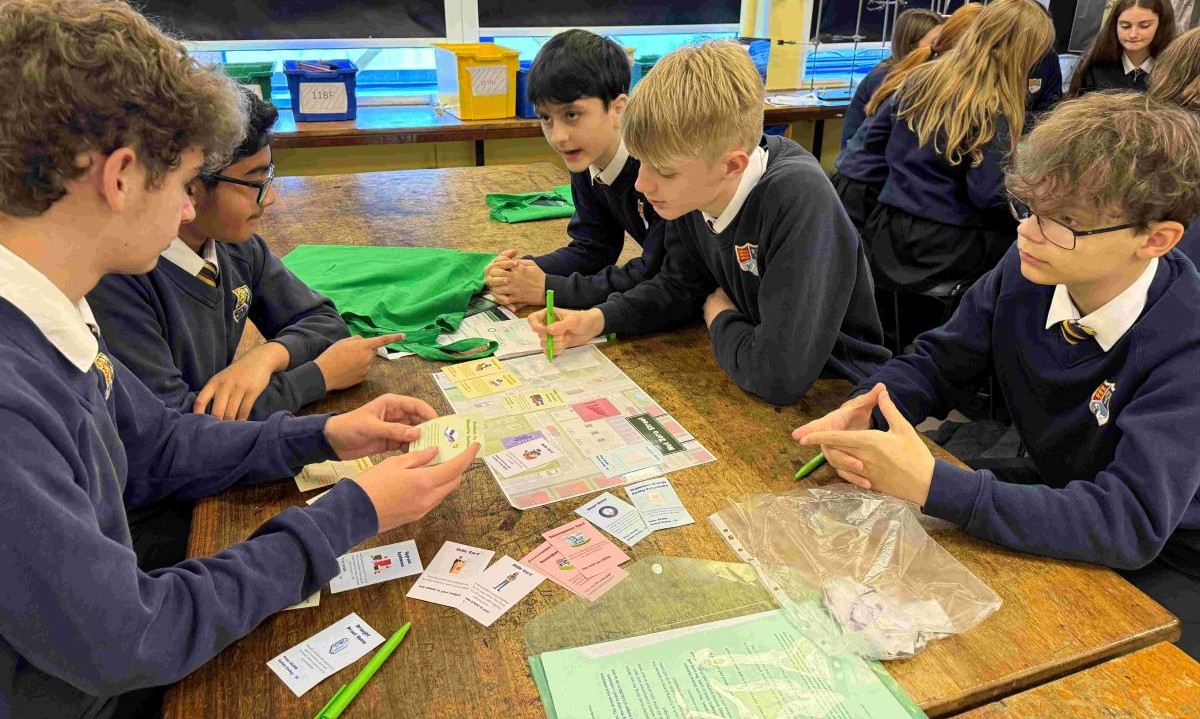
    University of Chester students gave back to their community by carrying out a litter pick in the city, as part of a wide range of volunteering opportunities.

    The students recently joined together to remove litter from the streets of the Garden Quarter, collecting several bags of rubbish.

    The session was organised by the University’s Volunteering Team, and was one of the latest in its ‘Give it a Go’ programme, offering students the chance to try out volunteering through a variety of activities.

    In addition to giving students volunteering experience and a way to make a difference to their community, the... Continue reading

    University of Chester students gave back to their community by carrying out a litter pick in the city, as part of a wide range of volunteering opportunities.

    The students recently joined together to remove litter from the streets of the Garden Quarter, collecting several bags of rubbish.

    The session was organised by the University’s Volunteering Team, and was one of the latest in its ‘Give it a Go’ programme, offering students the chance to try out volunteering through a variety of activities.

    In addition to giving students volunteering experience and a way to make a difference to their community, the litter pick and wider sessions provide the opportunity to meet other students and take a break from their studies.

    Pinkett Howard, who was part of the team of nine student volunteers, said: “As an undergraduate student pursuing Marine Biology, I believe whether we appreciate the land or sea, every little effort that each individual does, makes a great difference in our community, nation, and globally. Our contributions, even small, can reduce negative impacts on the environment. Therefore, this motivates me to take part in opportunities such as the litter pick, provided by the Volunteering Team at the University of Chester, which allowed me and others to clean, restore and do our bit in saving our planet.”

    Fellow student volunteer, Jones Laura, commented: “Taking part in the litter pick was a rewarding experience, I enjoyed meeting new people and seeing how our efforts encouraged others to reflect on their own actions, like using nearby bins more thoughtfully. It was also inspiring to receive appreciation from the community, which reminded us how important and impactful volunteer work can be for the local area.”

    Student Ryan Melrose, who also gave up his time for the session, said: “It was nice to see an opportunity to give back to the local community and make the area tidier. Now, when I walk along the streets, I know that I was part of the change.”

    Amber Gaffoor, Venture and Volunteering Co-ordinator at the University of Chester, added: “It’s inspiring to see students step forward to create change by trying something new and simply giving back. These moments build confidence, connection, and a real sense of purpose. The litter pick is a great example of feeling part of the community and seeing the difference their actions make.”

    Another ‘Give it a Go’ session earlier this year brought together 12 students to make a total of 33 dog toys which have been donated to an animal rescue centre. Also recently, during National Student Volunteering Week (beginning February 9), 15 students turned their hands to building bird houses, making 31 which will be put up across the University’s Exton Park site by the Grounds and Gardens Team. Upcoming ‘Give it a Go’ sessions include wildlife recording.

    Any charities or not-for-profit organisations interested in working with the Volunteering Team to offer volunteering opportunities or to organise a ‘Give it a Go’ session, are asked to please email: volunteering@chester.ac.uk

  • Share From Policy to People: What the Circular Economy Looks Like in Practice on Facebook Share From Policy to People: What the Circular Economy Looks Like in Practice on Twitter Share From Policy to People: What the Circular Economy Looks Like in Practice on Linkedin Email From Policy to People: What the Circular Economy Looks Like in Practice link

    From Policy to People: What the Circular Economy Looks Like in Practice

    by Eco Communities, 2 months ago

    Helen Tandy, Founding Director

    A Circular Economy conference in Birmingham shared a question: how do we move faster from a throwaway culture to one that values resources, skills and people?

    What stood out wasn’t just the scale of ambition, but the growing sense that the circular economy is no longer a niche idea. It’s becoming something tangible, shaped by policy, powered by businesses, and brought to life by communities like ours.

    The West Midlands: a circular economy in action

    West Midlands Mayor Richard Parker spoke about the region’s ambition to become a national leader in circular economy innovation, and the... Continue reading

    Helen Tandy, Founding Director

    A Circular Economy conference in Birmingham shared a question: how do we move faster from a throwaway culture to one that values resources, skills and people?

    What stood out wasn’t just the scale of ambition, but the growing sense that the circular economy is no longer a niche idea. It’s becoming something tangible, shaped by policy, powered by businesses, and brought to life by communities like ours.

    The West Midlands: a circular economy in action

    West Midlands Mayor Richard Parker spoke about the region’s ambition to become a national leader in circular economy innovation, and the progress already underway.

    More than 200 local businesses are actively reducing waste, cutting costs and lowering carbon emissions with support from the West Midlands Combined Authority. Alongside this, community repair initiatives in places like Sandwell and Birmingham are helping people fix, reuse and upcycle everyday items, reducing waste while building skills and connection.

    One standout example was a project at Birmingham Energy Park recycling critical battery materials, directly linking circular economy thinking to electric vehicle supply chains and regional resilience.

    The message was clear: collaboration is essential. Government, businesses and communities all have a role to play — and local insight is vital in shaping the policies that make circular solutions viable at scale.

    Policy is catching up — and that matters

    From a national perspective, DEFRA’s Deputy Director Nicola Hopley outlined how the UK Government is embedding circular economy principles into policy through the forthcoming Circular Economy Growth Plan.

    The focus is on making products more durable, repairable and recyclable, and on making reuse and refurbishment easier and more affordable for consumers.

    Some of the figures shared were stark:

    • Around £27 billion is lost every year in the UK through wasted food, clothing and electricals

    • Families lose roughly £1,000 annually through food waste alone

    • Packaging reforms are expected to create 25,000 jobs and stimulate billions in investment

    Policies such as Extended Producer Responsibility are shifting the cost of waste away from taxpayers and onto producers, incentivising better product design from the outset. Meanwhile, measures like the ban on disposable plastic vapes show how regulation can quickly reduce waste at scale.

    But speakers were clear that policy alone won’t deliver change. Skills gaps, infrastructure challenges and funding barriers remain, which is why collaboration across sectors, and investment in local solutions, is so important.

    When circular economy becomes real: reuse hubs in action

    One of the most energising moments of the day for me came during a workshop titled “Who makes a Reuse Hub work?” — a practical session focused on mapping the people, skills and systems needed to make reuse hubs successful.

    This is where theory met reality.

    The workshop featured input from Emma Porter and the team at The Rebuild Site(a Community Interest Company just like Eco Communities) — a brilliant reuse and reclamation project based in Carlisle. Their work shows what’s possible when building materials are treated as valuable resources rather than waste, and when communities are trusted to lead practical solutions.

    The session sparked big ideas, including what a fully-formed vision of a reuse hub closer to home, might look like complete with circular building-waste systems and a (jokingly appointed) warehouse manager of my husband.

    But the humour sits alongside something serious: reuse hubs work. They reduce waste, cut carbon, create jobs, support skills development and keep value circulating locally. Projects like The Rebuild Site demonstrate that circular economy principles can be embedded in everyday infrastructure, not just policy documents.

    Circular success stories already delivering impact

    Across the morning sessions, multiple real-world examples reinforced this point:

    • A renew hub in Greater Manchester refurbishes donated goods, generates income for charities and supports green jobs

    • A foundry business saves money and reduces emissions by reusing waste sand instead of sending it to landfill

    • Fashion rental platforms are extending the life of garments, saving consumers money and reducing demand for new production

    • In the West Midlands, industrial symbiosis projects are connecting manufacturers and construction firms to exchange surplus materials

    These aren’t pilot projects. They’re working models — delivering environmental, social and economic benefits right now.

    Why this matters for eco communities

    A consistent theme throughout the conference was that the circular economy is about more than waste. It’s about value, valuing materials, skills, time and people.

    For eco communities, this translates into:

    • Local jobs and training opportunities

    • Lower household costs through reuse and repair

    • Stronger, more resilient local economies

    • A sense of agency and hope in the face of climate challenges

    The West Midlands is showing what’s possible when leadership, policy and community action align. But the opportunity is everywhere, including here in Cheshire West and Chester — if ideas are properly supported and funded.

    The circular economy isn’t a distant concept. It’s already visible in repair cafés, reuse hubs, reclaimed materials and shared resources.

    And with the right support, there’s plenty more to do — and we’re up for it. ♻️🌱

    We are already growing our Refill and Reuse projects — (SUPPORT OUR CROWDFUNDER) from household liquids to event and party kits — and we’re exploring what a Library of Things could look like locally. We also want to expand opportunities for people to repair, repurpose and share clothes, building practical skills alongside community connection.

    We currently have three repair cafés in the region, all run by dedicated volunteers from groups like Transition Tattenhall, Friends of the Earth and more. They are brilliant examples of what communities can do, but they also highlight a hard truth. Some parts of the circular economy cannot, and should not, rely solely on volunteer goodwill.

    If repair, reuse and sharing are to become mainstream — not niche — they need to be treated as viable business models and essential local infrastructure. That means initial and transitional funding that allows people to be paid fairly for their time, skills and coordination work, while services embed themselves and develop sustainable income streams.

    This isn’t about replacing community energy, it’s about supporting it properly. With the right investment, repair and reuse can create local jobs, keep money circulating in our communities, reduce waste at scale and make circular living accessible to more people.

    The ambition is there. The models are proven.
    Now we need the funding structures to catch up.

    Additional Reading- Business Examples

    The Renew Hub — industrial-scale reuse and resale

    Based in Greater Manchester, the Suez Renew Hub operates on a 5,000 m² site where donated goods are repaired, refurbished and resold through physical stores and an online shop. It has created jobs and diverted large volumes of goods from waste streams. Suez working with Greater Manchester Combined Authority has created a structure which creates money which can support local charities and has created 20 green jobs so far.

    Sojo — fashion repair platform

    Founded in London to make clothing repair accessible via an app, Sojo connects customers with local seamsters and couriers and takes a commission on jobs. It has secured external investment (£300k pre-seed) and partnerships with major brands. Marks & Spencer, a mainstream UK retailer, has partnered with Sojo to offer clothing repair services to its customers, starting at just £5 — commercially scaling repair beyond niche markets. Sojo has 20 staff working in London.

    Crown Workspace Ltd — furniture reuse & refurbishment

    Back in 2013, Premier Moves (now Crown Workspace), a relocation company noticed that tens of thousands of items of workplace furniture were going to landfill with no consideration of the wider environmental impacts. Yet, an increasing number of their clients were expressing an interest in more sustainable options. Applying the principles of the waste hierarchy, Crown investigated the reasons why high-quality office furniture was being discarded. They found that many items were being discarded due to aesthetic preferences or sizing issues, leading to unnecessary waste.

    Crown introduced repair and resizing capabilities to extend the life of these assets. They began refurbishing furniture either for their original client or reselling it to others. At first, the company began manually remanufacturing desktops, but the process lacked precision and consistency. While the demand for this service was growing, it became clear that a more professional solution was required. As there were no existing examples of workplace furniture remanufacturing to replicate at the time, it was necessary to innovate! With a £50,000 WRAP grant in 2013, Crown Workspace invested in a CNC machine, transforming its ability to remanufacture office furniture with precision and efficiency. Crown Workspace has saved over 125,000 office items from waste, avoiding 7,100+ tonnes of CO₂e.

  • Share Turning the Tide on Toothpaste Tube Waste on Facebook Share Turning the Tide on Toothpaste Tube Waste on Twitter Share Turning the Tide on Toothpaste Tube Waste on Linkedin Email Turning the Tide on Toothpaste Tube Waste link

    Turning the Tide on Toothpaste Tube Waste

    by Eco Communities, 2 months ago

    Helen Tandy, Founder Eco Communities

    Why toothpaste packaging is finally becoming recyclable, and what that means for households and the environment

    For decades, toothpaste tubes have been a persistent recycling headache — and a surprisingly large contributor to household plastic waste. Traditionally, most tubes were made from mixed materials: layers of different plastics and a thin aluminium barrier. That combination made them almost impossible to recycle through standard kerbside systems, and as a result hundreds of millions of tubes sold every year ended up in landfill or incineration.

    The Problem with Old Toothpaste Tubes

    Helen Tandy, Founder Eco Communities

    Why toothpaste packaging is finally becoming recyclable, and what that means for households and the environment

    For decades, toothpaste tubes have been a persistent recycling headache — and a surprisingly large contributor to household plastic waste. Traditionally, most tubes were made from mixed materials: layers of different plastics and a thin aluminium barrier. That combination made them almost impossible to recycle through standard kerbside systems, and as a result hundreds of millions of tubes sold every year ended up in landfill or incineration.

    The Problem with Old Toothpaste Tubes

    • Most tubes sold in the UK — around 252 million a year, historically contained aluminium sandwiched between plastic layers.

    • This mix meant recycling facilities couldn’t separate the materials effectively; the tubes were therefore not recyclable in routine collections and often contaminated other recyclables.

    • Toothpaste tubes became one of the UK’s top “wish-cycled” items, people hope they’re recyclable but they’re usually not accepted.

    A Shift to Single-Material Plastics

    The good news is that toothpaste packaging is now being redesigned around a single recyclable plastic, especially high-density polyethylene (HDPE):

    • Major manufacturers — including **Colgate-Palmolive, Haleon (Sensodyne, Aquafresh, Corsodyl) and others in partnership with the recycling charity WRAP, have worked together to switch tubes from mixed materials to HDPE mono-material construction.

    • HDPE is the same kind of plastic used in milk bottles and is widely processed through standard plastic recycling streams.

    • This redesign means tubes are now technically 100 % recyclable, and more than 90 % of toothpaste tubes sold in England today are made this way.

    What’s Changing in 2026

    According to recent reporting:

    • From 31 March 2026, all toothpaste tubes sold in England will need to be recyclable under new recycling rules designed to standardize collections nationally.

    • Councils will be required to provide consistent kerbside recycling for plastic tubes alongside other “plastic pots, tubs and trays” as part of the Simpler Recycling reforms.

    ♻️ Why This Matters

    This shift is significant because:

    • It transforms an everyday item — used in almost every household — from plastic waste into a material stream that can re-enter the circular economy.

    • It also demonstrates how design-for-recycling (choosing materials that match existing recycling infrastructure) can unlock real improvements in waste management.

    • Manufacturers are sharing packaging innovations across the industry to promote broader uptake.

    Tips

    To ensure toothpaste tubes really get recycled (not just labeled recyclable):

    • Squeeze out as much paste as possible before recycling — residual product can reduce recovery rates.

  • Share Why Glass Still Makes Sense: Refill, Reuse, and the Power of Circularity on Facebook Share Why Glass Still Makes Sense: Refill, Reuse, and the Power of Circularity on Twitter Share Why Glass Still Makes Sense: Refill, Reuse, and the Power of Circularity on Linkedin Email Why Glass Still Makes Sense: Refill, Reuse, and the Power of Circularity link

    Why Glass Still Makes Sense: Refill, Reuse, and the Power of Circularity

    by Eco Communities, 2 months ago

    Helen Tandy, Founder Eco Communities

    Recently, a number of social media posts have claimed that glass bottles are worse for the environment than plastic because they are heavier to transport. Weight, they argue, equals higher emissions — case closed.

    But this argument only holds up if we assume a single-use, long-distance, disposable system.

    That’s not the system glass is meant for, and it’s certainly not the system we’re building through refill and reuse.

    The problem with focusing on weight alone

    Yes, glass weighs more than plastic. But sustainability can’t be measured by weight alone.

    Many liquids consumed in the... Continue reading

    Helen Tandy, Founder Eco Communities

    Recently, a number of social media posts have claimed that glass bottles are worse for the environment than plastic because they are heavier to transport. Weight, they argue, equals higher emissions — case closed.

    But this argument only holds up if we assume a single-use, long-distance, disposable system.

    That’s not the system glass is meant for, and it’s certainly not the system we’re building through refill and reuse.

    The problem with focusing on weight alone

    Yes, glass weighs more than plastic. But sustainability can’t be measured by weight alone.

    Many liquids consumed in the UK — including drinks, oils, and other food products — are transported in bulk containers (by ship or tanker) and only bottled in glass once they arrive in the UK. This significantly reduces packaging weight during long-distance transport.

    Here in the UK, companies such as Encirc, part of the Vidrala Group, which operates a major glass manufacturing and bottling facility near Chester, are already part of this model. Glass bottles are made, filled, and circulated domestically, supporting local jobs while reducing unnecessary transport emissions. Read More in this The Drinks Business Article


    So the idea that glass bottles are always shipped long distances in their final form simply isn’t true.

    Where refill schemes change everything

    The biggest flaw in anti-glass arguments is that they ignore reuse.

    This is where refill schemes, like doorstep milk delivery in reusable glass bottles, completely change the picture.

    Through our refill scheme Full Circle Refill Scheme, the liquids are collected in bottles which can we refilled again and again. Kept in a closed-loop system within the community. Peckforton Dairy in Tarporley deliver large bottles of milk in glass to many Chester businesses. I have almost always had door step milk deliveries, whether for milk or oat milk.

    A single glass milk bottle can be reused dozens of times, replacing dozens of plastic bottles that would otherwise be used once and discarded.

    When a glass bottle eventually reaches the end of its life, it can be recycled back into new glass without loss of quality. Plastic can’t do that.

    This is what a circular economy actually looks like.

    Plastic’s advantage, and its hidden cost

    Plastic is often defended because it’s lightweight. But lightweight packaging comes with heavyweight consequences.

    Plastic bottles are usually made from fossil fuels, degrade every time they’re recycled, and frequently end up incinerated, landfilled, or leaking into the natural environment. They also shed microplastics, which are now found in water, food, and human bodies — including children’s.

    Glass doesn’t leach chemicals, doesn’t shed microplastics, and doesn’t degrade with reuse.

    When we’re talking about everyday essentials like milk — especially for families — that matters.

    Health, trust, and everyday wellbeing

    Glass is chemically inert. It doesn’t absorb flavours, colours, or bacteria, and it doesn’t release endocrine-disrupting chemicals into food and drink.

    For households using doorstep milk delivery, refillable glass bottles offer:

    • Reduced plastic exposure

    • A safer container for food

    • A visible, practical climate-positive habit

    Refill isn’t just about waste reduction — it’s about health, trust, and long-term wellbeing.

    Rethinking convenience

    Critics of glass often frame reuse as inconvenient or old-fashioned. But refill schemes work because they’re designed into daily life.

    Doorstep milk delivery removes the need for repeated purchases of disposable packaging. Bottles are delivered, collected, and reused as part of a simple, reliable system.

    This isn’t a step backwards — it’s a smarter system.

    Asking the right question

    Instead of asking:

    “Is glass heavier than plastic?”

    We should be asking:

    “Is this packaging designed to be reused locally , or thrown away after minutes of use?”

    When glass is used as intended — refilled, returned, and reused — it outperforms plastic environmentally, socially, and for health.

    The takeaway

    Glass isn’t the problem.
    Single-use systems are.

    Refill schemes like doorstep milk delivery show that we already have practical, working solutions that cut plastic waste, reduce pollution, and support healthier communities.

    If we’re serious about sustainability, the answer isn’t lighter disposables, it’s stronger local systems. And refillable glass bottles are a proven part of that future. That's why here at Eco Communities we are talking more about circular living -

    👉 Find out more about our refill scheme here: CLICK HERE


  • Share Design Awards Announced for Cheshire West on Facebook Share Design Awards Announced for Cheshire West on Twitter Share Design Awards Announced for Cheshire West on Linkedin Email Design Awards Announced for Cheshire West link

    Design Awards Announced for Cheshire West

    5 months ago
    Image of people holding their awards on the town hall stairs

    The Cheshire West Design Awards for 2025 have been announced at a ceremony in Chester Town Hall last Thursday.

    The ceremony saw many of the region’s architectural design and property professionals gather to celebrate Cheshire West’s best places and building projects completed over the last four years in 5 categories – commercial, community, public realm, residential and sustainable design and construction. Including those receiving awards, there were over 140 people at the ceremony.

    Chair of judges, Peter Hadfield said; “By rewarding the best architectural projects, this Award Scheme stimulates interest in our built environment and develops a deeper and broader... Continue reading

    The Cheshire West Design Awards for 2025 have been announced at a ceremony in Chester Town Hall last Thursday.

    The ceremony saw many of the region’s architectural design and property professionals gather to celebrate Cheshire West’s best places and building projects completed over the last four years in 5 categories – commercial, community, public realm, residential and sustainable design and construction. Including those receiving awards, there were over 140 people at the ceremony.

    Chair of judges, Peter Hadfield said; “By rewarding the best architectural projects, this Award Scheme stimulates interest in our built environment and develops a deeper and broader appreciation of both traditional craft skills and high quality contemporary construction.”

    He added; “The aim of these awards is to make Cheshire West and Chester a better place to live, work and visit by encouraging outstanding design and projects and gaining national recognition for this.”

    The Commercial category awards were presented by Legat Owen’s Director Will Sadler to The Square at Chester Zoo, The Northgate Development and for refurbishment of The Old Post Office in St John St, Chester. Commendations were given for Okells Hoole, The Station Tap in Chester and The White Horse in Churton. A highly commended went to 15-23 Frodsham Street, Chester.

    The Community Category was presented by P4 Planning’s Founder and MD, Bill Davidson. Awards were given for Community New Build and Refurbishment to Theatre Porto in Ellesmere Port and to Chester Cathedral for the West End Reordering including the new doorway. Commendations went to Hoole Tennis Club’s Club House, The Portal in Ellesmere Port and Five Villages Hall at Backford.

    Christine Russell, Chair of Chester Civic Trust presented The Award for Public Realm Regeneration to Chester Town Hall Square and for Conservation & Restoration for the work on Chester Rows. Commendations were awarded to The Narrows Community Park, the Thomas Brassey Statue outside Chester Station, the Wirral Way and Blacon’s Parade Pedestrianised Area.

    The awards for residential development were presented by Rob Charnley, CDWA Committee member & Head of Planning and Place Making at Cheshire West & Chester Council. The Award for Residential Renovation and Conservation was given to Grosvenor Hart Homes for its work on the Alms Houses in Chester, and the award for Residential New Build went to The Knoll in Mouldsworth. Commendations went to Pure Homes for Beaufort Court, Carden Homes for Old Hall Country Estate, The Boathouse in Farndon and The Flaggs and Hamilton House in Tarvin.

    Awards for Sustainability were presented by VELUX UK. Richard Williams, Senior Architect Development Manager commended Eco House at the Cheshire College South and West’s Ellesmere College campus, Chester Cathedral’s Solar Panels and the University of Chester’s School of Education conversion. The award went to Chester Zoo for their work on the Nature Recovery Corridor and Tree Planting there. The Nature Recovery Corridor covers 60 Hectares between Chester and Ellesmere Port. Native UK wildlife resources have been created, new ponds, orchards, wildflower meadows and community nature areas include interpretation signs and bespoke art together with 4 new walking routes.

    Samantha Dixon MP for Chester North and Neston said in her closing speech; “The role of skilled designers, architects, and built-environment professionals is vital. We are incredibly fortunate to have such talent here in our region, collaborating and working together. Tonight’s award winners embody the very best of this dedication. They show that design in Cheshire West and Chester can be inspiring, practical, sustainable—and rooted in the distinct character of our communities. We are all winners when great design is evident, as it is here tonight.”

    Councillor Louise Gittins, Leader of Cheshire West and Chester Council added: “Many congratulations to all of the excellent projects that have been both awarded and commended, and all of these projects have been completed within the past four years. With so many new projects underway across the borough I’m sure the judges will be spoilt for choice at the 2030 awards.”

    The next awards will be made in 2030. More details at https://cwda.uk

  • Share 'Beyond caring: how places are formed through care, and the lack of it', with Dr Julian Dobson on Facebook Share 'Beyond caring: how places are formed through care, and the lack of it', with Dr Julian Dobson on Twitter Share 'Beyond caring: how places are formed through care, and the lack of it', with Dr Julian Dobson on Linkedin Email 'Beyond caring: how places are formed through care, and the lack of it', with Dr Julian Dobson link

    'Beyond caring: how places are formed through care, and the lack of it', with Dr Julian Dobson

    by SERKEI, 5 months ago


    Dr Julian Dobson is a writer and researcher with a particular interest in place and community, developed over a career as a journalist, consultant and academic. He is based in the Centre for Regional Economic and Social Research at Sheffield Hallam University. He will be joining us to talk about 'Beyond caring: how places are formed through care, and the lack of it' on Tuesday 28th April 2026 from 6:00 PM - 7:00 PM at University of Chester, Senate House, Exton Park Campus,, CH1 4BJ

    The geographer Doreen Massey describes how places are formed by the ‘throwntogetherness’ of different communities... Continue reading


    Dr Julian Dobson is a writer and researcher with a particular interest in place and community, developed over a career as a journalist, consultant and academic. He is based in the Centre for Regional Economic and Social Research at Sheffield Hallam University. He will be joining us to talk about 'Beyond caring: how places are formed through care, and the lack of it' on Tuesday 28th April 2026 from 6:00 PM - 7:00 PM at University of Chester, Senate House, Exton Park Campus,, CH1 4BJ

    The geographer Doreen Massey describes how places are formed by the ‘throwntogetherness’ of different communities and circumstances. This talk asks how we might think of places if we consider them as sites not only of happenstance but also of care, a conscious investment of time and attention in shared wellbeing. Who is included in such care and how might it manifest itself? Drawing on recent work on the civic role of universities and on the idea of ecological citizenship, Julian Dobson considers how care and mutuality could be rebuilt in an era of fragmentation and distrust.

    Free tickets are available using the link below:-

    https://www.tickettailor.com/events/sustainabilityenvironmentrkei/1938699

  • Share 'Use of the Earth's subsurface for the safe and sustainable extraction and storage of energy', with Professor Chris Jackson on Facebook Share 'Use of the Earth's subsurface for the safe and sustainable extraction and storage of energy', with Professor Chris Jackson on Twitter Share 'Use of the Earth's subsurface for the safe and sustainable extraction and storage of energy', with Professor Chris Jackson on Linkedin Email 'Use of the Earth's subsurface for the safe and sustainable extraction and storage of energy', with Professor Chris Jackson link

    'Use of the Earth's subsurface for the safe and sustainable extraction and storage of energy', with Professor Chris Jackson

    by SERKEI, 5 months ago

    Professor Chris Jackson is Technical Director at the engineering consultancy WSP and Visiting Professor of Basin Analysis at Imperial College London. He will be joining us to talk on Tuesday 27th January 2026 at 6:00 PM - 7:00 PM at the University of Chester, Senate House, Exton Park campus, CH1 4BJ .

    Chris is interested in understanding how we can use the Earth’s subsurface to safely store hazardous waste (‘geostorage’) and to develop low-carbon energy resources (‘geoenergy’). In this public lecture, he explores the possibilities of these processes and technologies for the North-West of England. When not studying the subsurface... Continue reading

    Professor Chris Jackson is Technical Director at the engineering consultancy WSP and Visiting Professor of Basin Analysis at Imperial College London. He will be joining us to talk on Tuesday 27th January 2026 at 6:00 PM - 7:00 PM at the University of Chester, Senate House, Exton Park campus, CH1 4BJ .

    Chris is interested in understanding how we can use the Earth’s subsurface to safely store hazardous waste (‘geostorage’) and to develop low-carbon energy resources (‘geoenergy’). In this public lecture, he explores the possibilities of these processes and technologies for the North-West of England. When not studying the subsurface of the Earth, Chris gives geoscience lectures to the public and in schools, having appeared on several, Earth Science-focused, television productions and podcasts. Chris is engaged in efforts to improve equality, diversity, and inclusivity within science and engineering.

    Free tickets available using the link below:-

    https://www.tickettailor.com/events/sustainabilityenvironmentrkei/1843578